

Your data deserves more than a deployment.
It deserves a framework.
Introducing the Antares Polaris Framework — our proven, end-to-end methodology for designing, building, governing, and running Microsoft Fabric data platforms that deliver real business value from day one. Not a one-and-done project. A long-term data investment.
20+
Years Microsoft data expertise
Zero
Data loss on migrations – by design
End-to-end
Strategy through managed operations
12
Microsoft Specialisations
What is the Polaris Fabric Framework?
Most Microsoft Fabric implementations follow a familiar pattern — a set of best practices for architecture and governance, applied project-by-project. The Polaris Framework goes further. It’s a complete operating model for your data estate, covering everything from the first line of pipeline code to the strategic decisions your leadership team makes on Monday morning.
Built for Australian organisations
We’ve spent more than two decades delivering Microsoft data platforms across Australian government, healthcare, education, financial services, and commercial sectors. The Polaris Framework reflects what actually works in Australian enterprise environments — including data sovereignty, regulatory compliance, and the practical realities of Australian IT teams.
Designed for the long run
A data platform isn’t a project — it’s a living capability. The Polaris Framework is structured around continuous value delivery, with managed operations, ongoing optimisation, and a dedicated team that treats your data estate as a long-term investment. We don’t build and walk away.
Proprietary tooling included
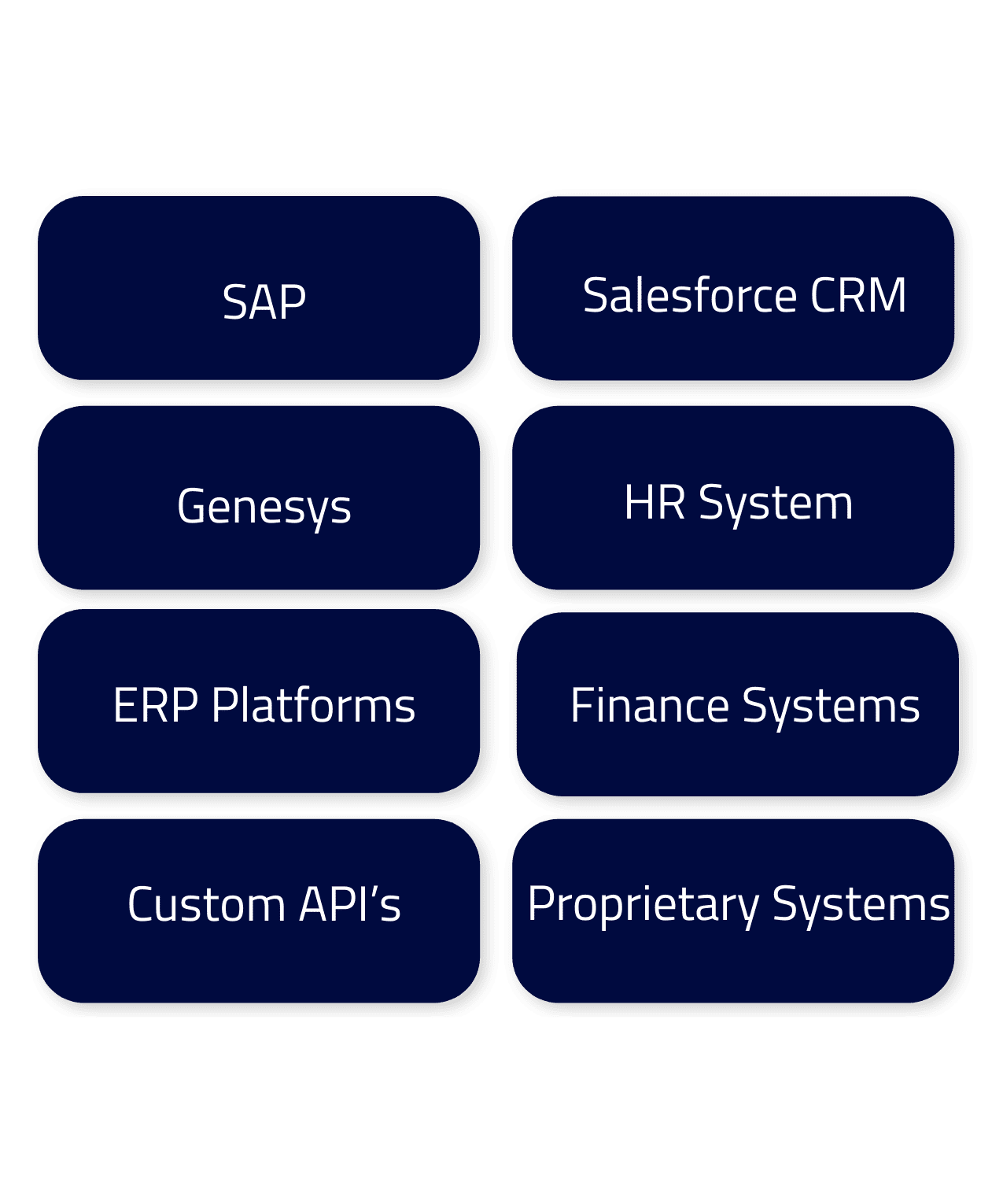
Unlike generic Fabric frameworks, Polaris comes with a secret weapon — the Antares Integration Hub. Our proprietary Azure-native PaaS platform solves the hardest part of any Fabric project: getting your data in. Pre-built connectors to SAP, CRM, ERP, and HR systems mean you’re not starting from scratch on integrations.
Faster time to value
Because the framework is proven, repeatable, and supported by our Integration Hub and managed services model, our clients see working analytics earlier, spend less time on infrastructure plumbing, and get to the insight layer faster than they would with a custom-built approach.
The Antares Data Philosophy
We design the architecture, build the pipelines, govern the data, and then stay to run and optimise. Our clients get a data platform that keeps delivering as their organisation grows — and a partner that treats their data estate as a competitive advantage, not a checked box.
The Antares Integration Hug – Your Data Sources, Connected
Most data platform projects spend 60–70% of their budget building custom integrations. The Antares Integration Hub is our Azure-native PaaS platform that eliminates that problem entirely — with pre-built connectors to the systems your data already lives in. It’s one of the things that makes the Polaris Framework genuinely different to everything else in the market.

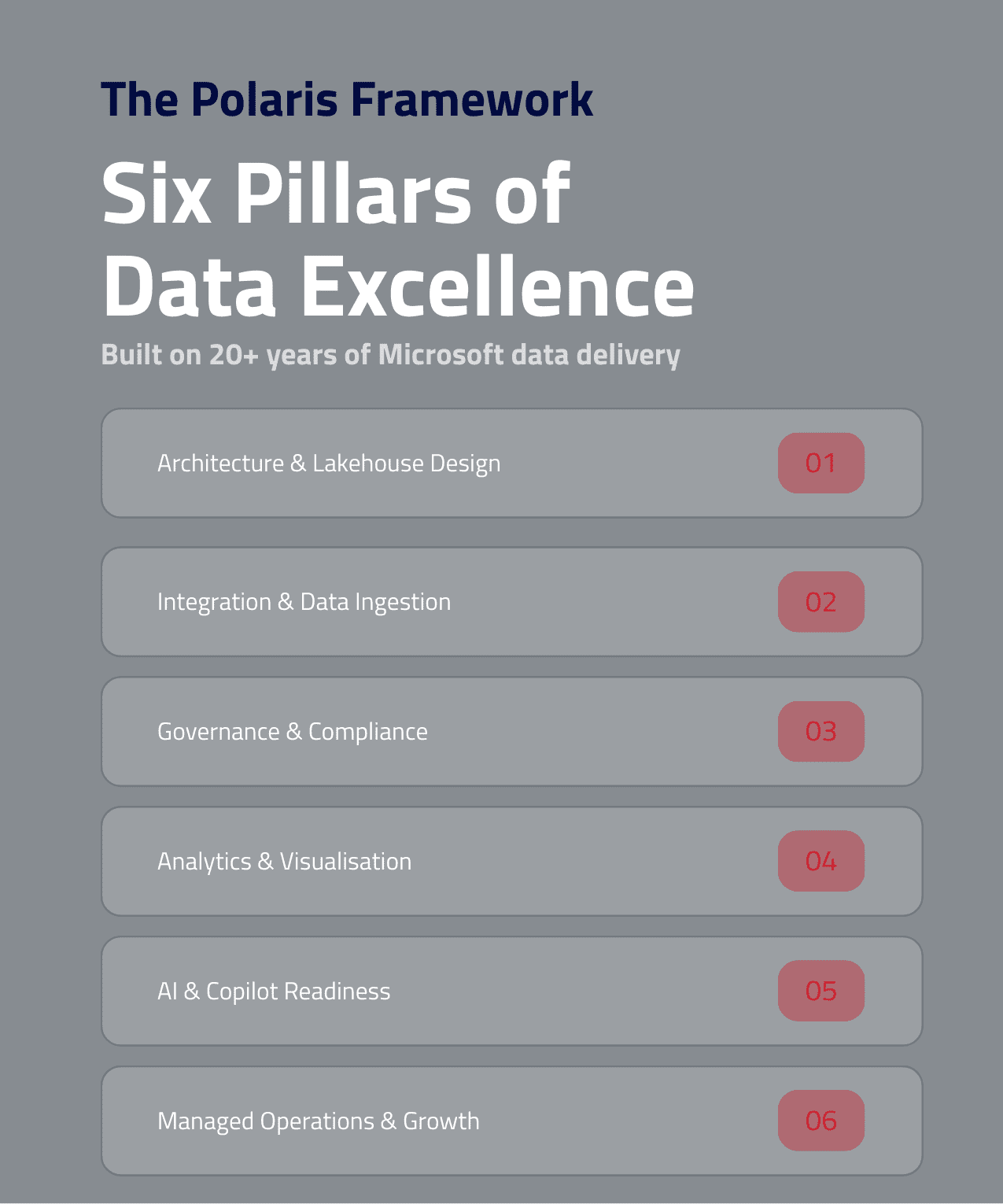
Six Pillars of the Polaris Framework
Every Fabric engagement we deliver is structured around these six pillars. They’re not a checklist — they’re the building blocks of a data platform that works, scales, and earns trust across your organisation.
Architecture & Lakehouse Design
Every platform we build is grounded in Microsoft Fabric’s medallion architecture — Bronze, Silver, and Gold — designed for your specific data volumes, domains, and future AI requirements.
– OneLake domain-driven design
– Workspace governance & security
– Lakehouse vs Warehouse decision framework
– Real-time & batch architecture patterns
– Capacity planning & cost governance
Integration & Data Ingestion
Getting data into Fabric is where most projects stall. Our proprietary Antares Integration Hub eliminates the custom-build bottleneck with pre-built connectors and event-driven orchestration.
– Antares Integration Hub (Azure-native PaaS)
– Pre-built: SAP, CRM, ERP, HR, Genesys
– Event-driven & real-time data flows
– API management & OAuth 2.0 security
– Custom connector development
Governance & Compliance
Trust in data starts with governance. We embed Microsoft Purview, data classification, lineage, and a master data management framework from the very beginning — not as an afterthought.
– Microsoft Purview catalogue & lineage
– Data classification & sensitivity labels
– Master data management design
– Regulatory & data sovereignty controls
– Data stewardship operating model
Analytics & Visualisation
A data platform is only valuable when people actually use it. We build Power BI solutions, semantic models, and self-service analytics that business users trust and act on.
– Semantic models & Direct Lake connections
– Enterprise Power BI report & dashboard delivery
– Self-service analytics & CoE enablement
– KPI frameworks & scorecards
– Paginated reports & executive dashboards
AI & Copilot Readiness
AI is only as good as the data underneath it. Polaris builds your Fabric environment so it’s genuinely ready for Microsoft Copilot, Azure OpenAI, and the next generation of AI-powered analytics.
– AI-ready Gold layer dataset design
– Copilot for Power BI enablement
– Azure OpenAI integration patterns
– Data quality standards for ML models
– Responsible AI governance framework
Managed Operations & Growth
We don’t leave when the project closes. Our Data Team as a Service model keeps your platform healthy, optimised, and growing — with a dedicated team that becomes an extension of yours.
– End-to-end managed platform operations
– Data Team as a Service (engineers, architects)
– Power BI managed services & optimisation
– Proactive monitoring & incident response
– Monthly strategic advisory & reporting
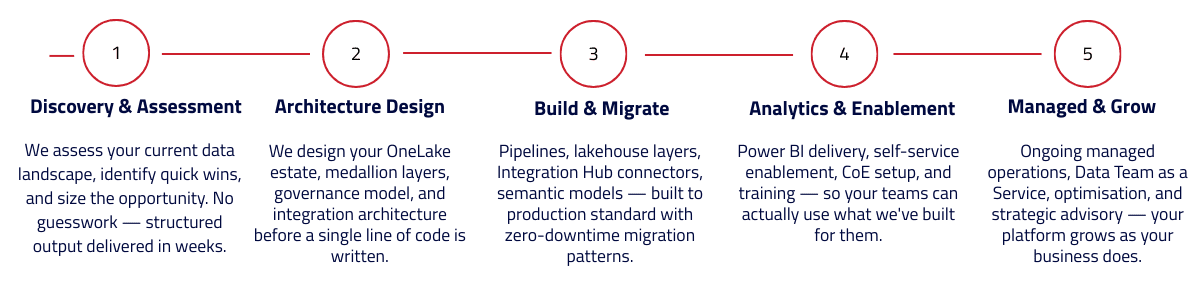
From Discovery to Delivered – The Polaris Journey
Every Polaris engagement follows a structured, low-risk delivery model. We get your stakeholders aligned, assess your current state, design the architecture, build with confidence, and then stay on to make sure the platform keeps delivering.
Your data platform should be working harder than it is.
Let’s fix that.
Book a no-obligation data discovery call with our team. We’ll take an honest look at your current data estate, talk through where the Polaris Framework could make the biggest difference, and give you a clear picture of what a Fabric platform built to last actually looks like.