
Overview
For more than 25 years, Health Workforce Queensland (HWQ) has been the only not-for-profit dedicated to ensuring primary health professionals are recruited and retained across the state’s most in-need remote, rural and regional communities. They work closely with governments, stakeholders and communities to fill workforce gaps across general practice, allied health and Aboriginal Community Controlled Health Services, also supporting the next generation of health professionals through the rural and remote pathway.
HWQ became very good at accumulating incredibly valuable but siloed datasets, including practitioner records, service listings, community health indicators, wait time snapshots and much more. The problem was that almost none of it was talking to the rest of it.
HWQ partnered with Antares to change that. Together, they built a modern data platform on HWQ’s existing Microsoft cloud stack. This model centralised datasets, automated ingestion pipelines and delivered an interactive Power BI dashboard that gave the organisation real-time intelligence. More importantly, they built it in a way that genuinely reflected how HWQ works, what it needs and where it wants to go.
The Challenge: Work smarter, not harder
Unsurprisingly, HWQ holds a wealth of information on practitioners, services and communities across Queensland. Over time this data has been collected through a range of programs, systems and initiatives to meet specific operational needs. These datasets were not always connected, limiting the organisation’s ability to view workforce supply, demand and service pressures through a single, state-wide lens.
In practice, this meant teams often relied on point-in-time reports and manual analysis to inform decisions. This isn’t unique to HWQ, many complex organisations and institutions struggle with the same challenge.
HWQ recognised the opportunity to do more with the data it already had. Rather than traditional reporting improvements, the organisation sought a modern platform that could bring information together into a shared and interactive view of workforce need and activity. This solution supported smarter prioritisation, faster decision-making and stronger alignment with its mission to improve access to care in rural and remote communities.
“We had a lot of data, but we weren’t placed to best utilise the technology and the data that we had to give real-time insights.” — Daniel Learoyd, Health Workforce Queensland
Finding the Right partner
HWQ was already deeply invested in the Microsoft ecosystem, so any solution had to work within — not around — that environment. Microsoft recommended Antares, and from the very first conversation it was clear this was going to be a different kind of engagement.
Antares didn’t arrive with a solution already mapped out. Instead, the team spent time listening. They ran co-design workshops with HWQ’s leadership and operational staff, to understand not just what the systems did, but how the organisation worked and what it was genuinely trying to achieve. From those conversations, Antares and HWQ sketched a phased, two-year roadmap together. The roadmap prioritised meaningful quick wins while building toward more sophisticated capabilities like modelling.
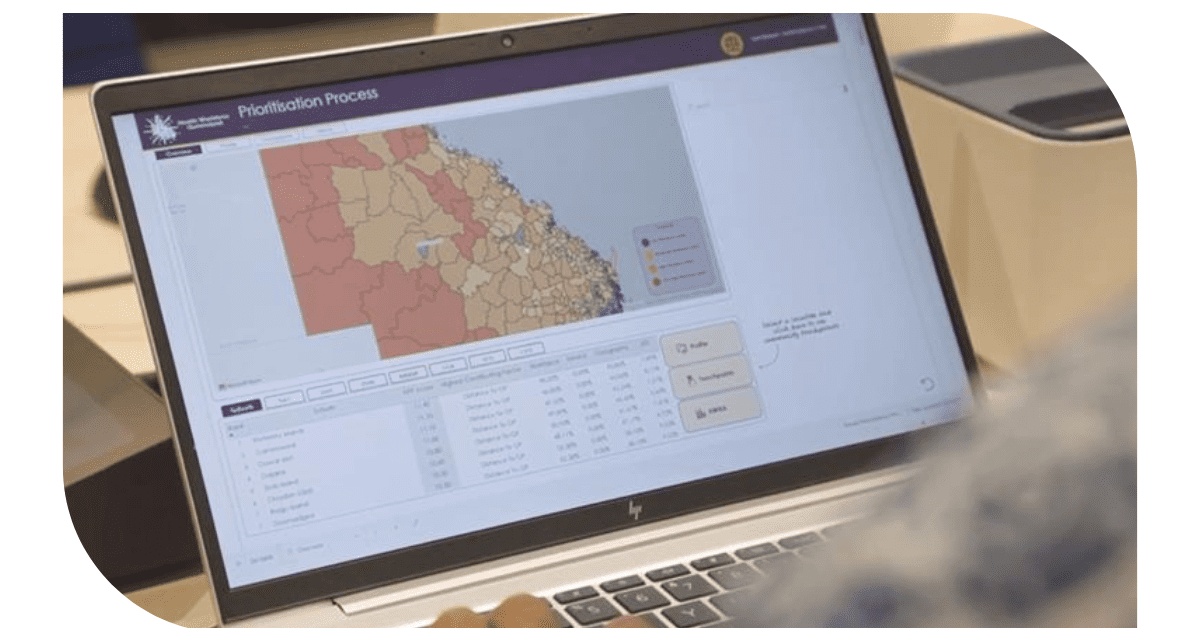
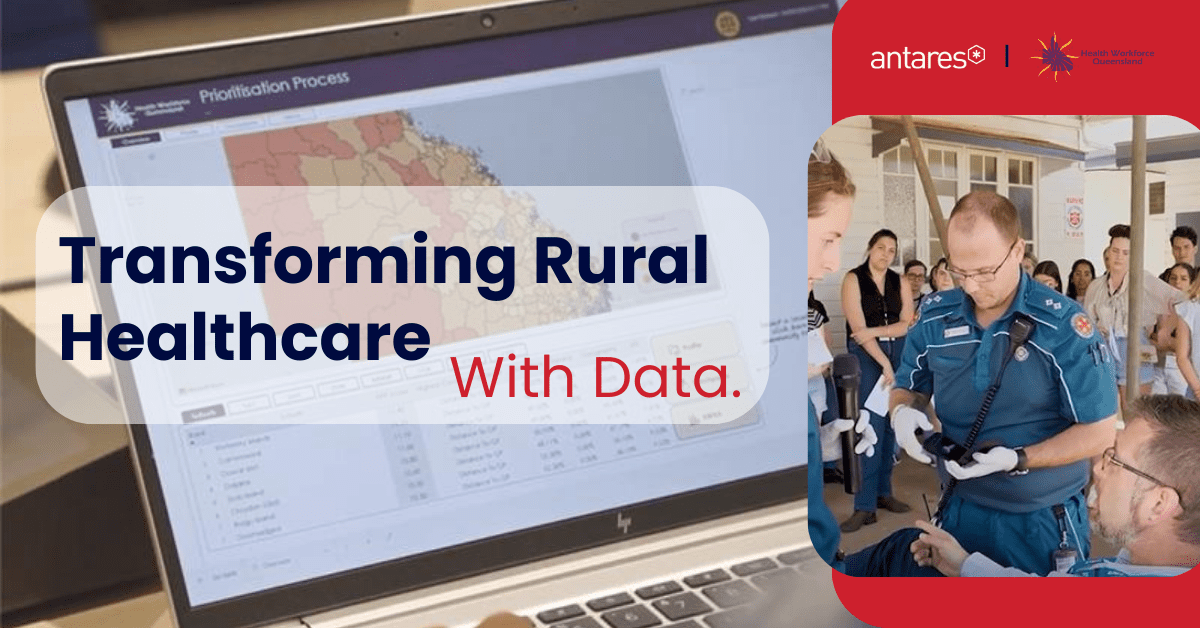
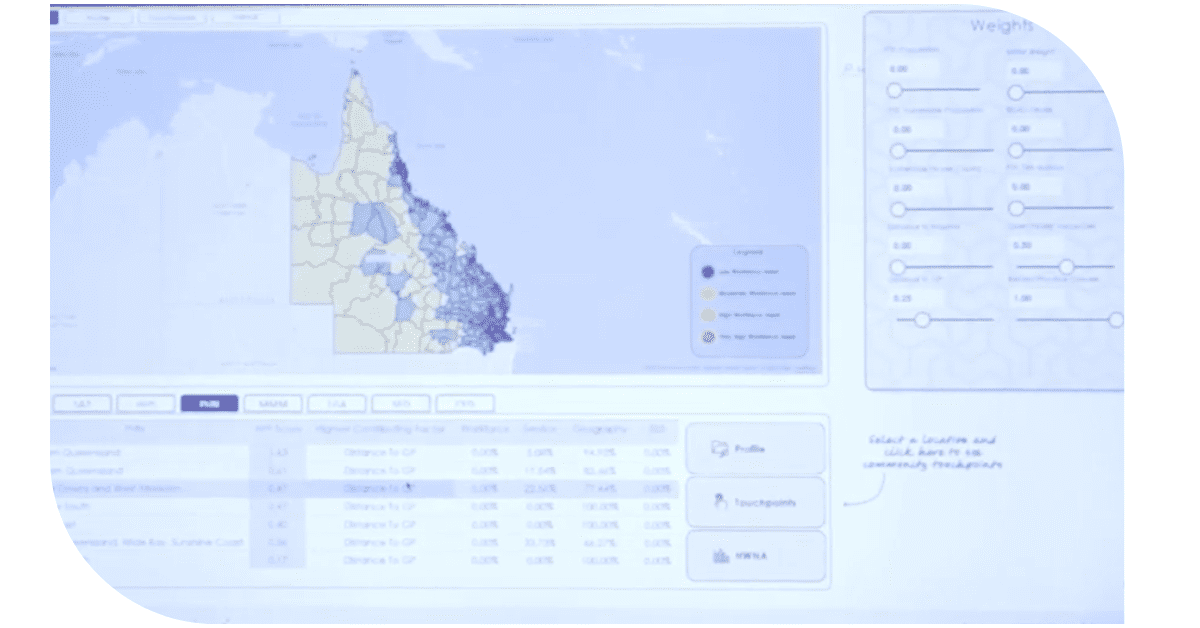
“Now we’re able to see what the workforce needs are in real time on a map… Being able to use it for advocacy is a real benefit to us.” — Jo Simons, Executive Manager Strategy and Partnerships, HWQ
What Antares Delivered
A single source of truth
Built within HWQ’s Microsoft environment, the new data lake brought previously fragmented datasets together and automated manual processes, giving the organisation a reliable foundation it can maintain and grow over time.
Real-time operational intelligence
On top of the data platform, Antares worked with HWQ internal teams to deliver interactive Power BI dashboards aligned to HWQ’s core priorities. These dashboards enable teams to explore data dynamically, test assumptions and visualise workforce need in real time, supporting more responsive and collaborative planning.
Capability uplift, not just delivery
Antares was equally committed to making sure HWQ’s own team could manage, adapt and extend the platform over time. Capability uplift was built into the engagement from the start. HWQ staff left the project empowered to tell stories with data, not dependent on an external vendor to do it for them.
The Impact
The impact has been immediate. HWQ now has faster access to consistent, trusted evidence to support prioritisation, build clearer narratives about workforce need, and program impact.
The introduction of self-service dashboards has also changed how the organisation operates day-to-day. Internal conversations and stakeholder engagement increasingly utilise the live dashboard, allowing teams to explore what is happening on the ground and make evidence-based decisions. This ability is supporting stronger stakeholder relationships, and a growing reputation for transparency and data-informed workforce planning.
“Automation gave the business an immediate benefit of enabling us to ingest further data and also the opportunity to create interactive dashboards where the business gained an immediate, real-time view of its performance.” — Daniel Learoyd, Health Workforce Queensland
Looking Forward
The platform Antares and HWQ built together is more than a product, it’s a foundation. With a central data lake and automated pipelines as the backbone, HWQ is now positioned to scale into richer predictive models, integrate more datasets and tell an even bigger, fuller story about the healthcare workforce across remote and rural Queensland.
HWQ is excited for the future and hope to do something no one has before: anticipate workforce gaps before they become crises and test potential responses before committing to them. For an organisation whose mission is to ensure all remote and rural Queenslanders have access to quality primary care no matter where they live, using data to enable proactive planning is transformative.